There are certain New York moments that still feel surreal to me no matter how many years I’ve lived here, and walking through The Metropolitan Museum of Art before opening hours is definitely one of them.
The city outside is already awake, taxis rushing down Fifth Avenue, people heading to work with coffees in hand, tourists slowly gathering near the museum steps, and meanwhile inside the Met everything feels still and quiet. The galleries are almost empty except for security guards, museum staff making last-minute adjustments, and a small group of people lucky enough to experience the museum before the doors officially open to the public.
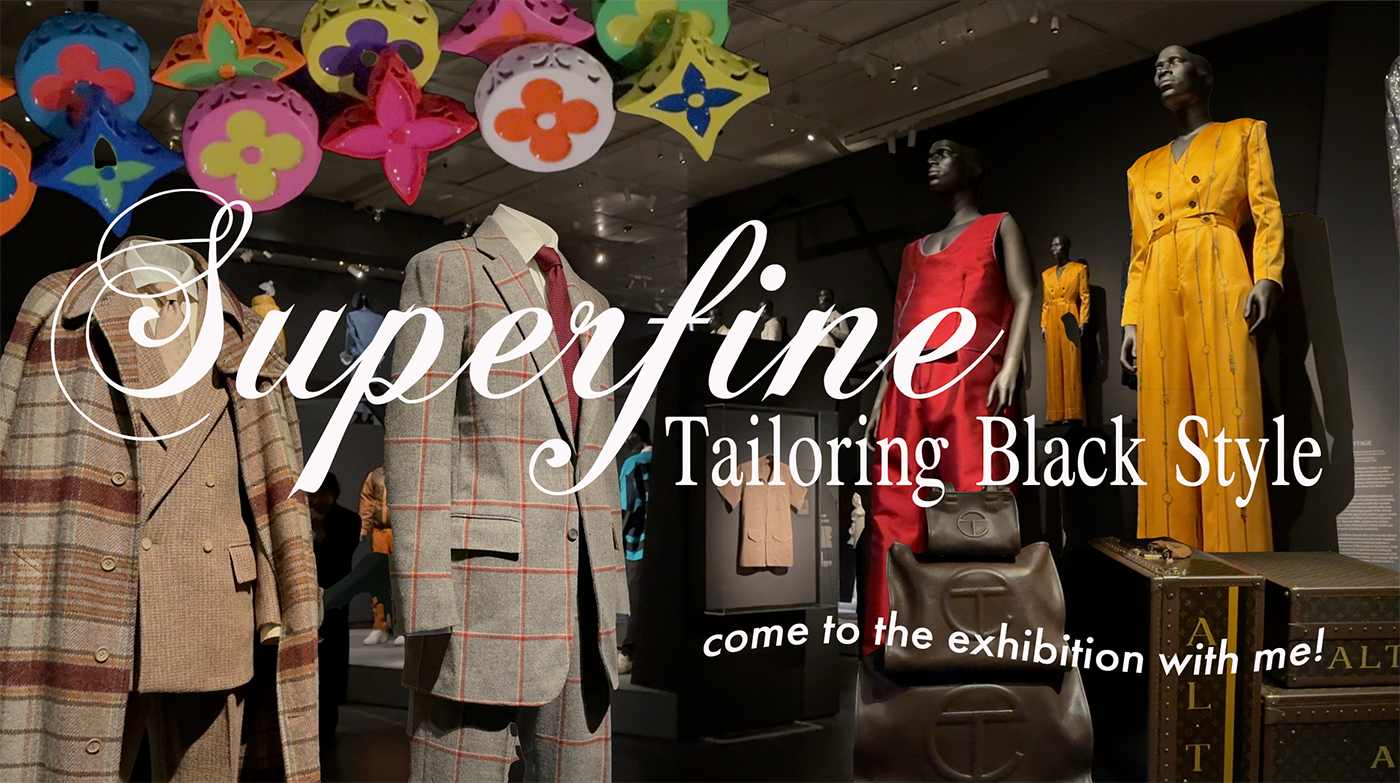
A few days ago, I had the chance to return to the Met for one of my favorite yearly traditions: visiting the new Costume Institute exhibition right after the Met Gala. This year’s exhibit, Superfine: Tailoring Black Style, opened shortly after the gala and explores Black dandyism, tailoring, fashion history, identity, and self-expression through the lens of Black culture and American history.
And honestly, after spending the morning there, I left thinking less about celebrity red carpets and more about the way clothing carries history with it, whether we realize it or not.
If you follow fashion online at all, you probably know what the Met Gala is. Every year, usually on the first Monday of May, the steps of the Met turn into what is essentially the most famous red carpet in the world. Celebrities arrive in elaborate couture looks inspired by the year’s theme, social media explodes for a few hours, everyone debates their favorite outfits, and then by the next morning the internet has mostly moved on to something else.
But what I think a lot of people don’t fully realize is that the gala itself is actually a fundraiser for the Costume Institute inside the Met, and the exhibition attached to it is the real heart of the whole thing. The Costume Institute has been creating these exhibitions for decades, each one centered around a specific theme tied to fashion, design, culture, history, or identity. Some focus more on craftsmanship, others on specific designers or historical periods, and some, like this year’s, feel deeply rooted in social and cultural history.
This year’s exhibit was guest curated by Monica L. Miller, whose 2009 book Slaves to Fashion: Black Dandyism and the Styling of Black Diasporic Identity inspired the exhibition. We were actually guided through the exhibit by Professor Miller herself, which made the experience even more special because instead of simply observing the clothes, we were able to hear directly from the person whose research and ideas shaped the exhibition from the beginning.
Before entering the galleries, she explained the concept of dandyism, which is central to the exhibit. Traditionally, a dandy is someone deeply devoted to style, tailoring, elegance, and personal presentation. But within the context of Black history, the idea becomes much more layered and meaningful. Fashion, tailoring, and personal style became forms of self-expression, resistance, identity-building, aspiration, and visibility within a society that historically denied Black individuals power, autonomy, and humanity.
As someone born and raised in Argentina who has only lived in the United States for several years, I found myself reflecting throughout the exhibit on how much American history I’m still learning. Of course, through books, films, documentaries, and simply living here, I’ve learned a great deal over the years, but I also recognize that there are experiences and cultural layers I’m still trying to better understand. I appreciated that the exhibit didn’t simplify those histories or present fashion as something superficial or detached from the realities people lived through.
In fact, what struck me most about this exhibition is that it feels less like a traditional fashion exhibit and more like a conversation between fashion, history, politics, identity, and culture.
The exhibit itself is organized into twelve sections inspired by Zora Neale Hurston’s 1934 essay Characteristics of Negro Expression. As you move through the galleries, themes like ownership, respectability, freedom, disguise, beauty, performance, and presence begin to emerge through clothing, photography, artwork, tailoring, accessories, and archival materials spanning generations.
One moment you’re looking at garments worn centuries ago, including clothing connected to enslaved individuals, and the next you’re standing in front of contemporary runway pieces by Black designers whose work continues shaping fashion today. The exhibit constantly moves between past and present, showing how style evolves but also how certain ideas, influences, and forms of expression continue carrying forward through generations.
I think what makes the exhibit especially powerful is the way it contextualizes fashion within broader American history. Fashion is so often dismissed as something shallow or frivolous, especially when associated with women or with luxury culture, but exhibits like this remind you that clothing has always communicated something deeper. Tailoring, uniforms, fabrics, silhouettes, hairstyles, accessories, and even the act of dressing elegantly itself can become statements about class, race, power, belonging, rebellion, aspiration, or survival.
There’s one section centered around sports and athletic identity that particularly stayed with me, featuring references to Black jockeys, boxers, and athletes whose presence shaped both sports and style culture. Another part explores the idea of disguise and transformation through clothing, including stories of enslaved people who used fashion strategically while escaping slavery. Throughout the exhibit, fashion becomes inseparable from the realities people were navigating historically.
And yet despite the weight of those histories, the exhibit is still visually stunning in the way the Costume Institute always is.
One detail Professor Miller pointed out during the tour completely changed the way I experienced the exhibition afterward. She explained that the contemporary high-fashion pieces displayed elevated above visitors’ heads are mostly modern runway designs from the past few decades, while the garments positioned at eye level are primarily historical pieces actually worn by people throughout history.
It sounds like a small curatorial decision, but once she mentioned it, I couldn’t stop noticing it. The historical garments suddenly felt incredibly intimate because they existed directly in front of you at human level. You could see the stitching, the fabrics, the tailoring, the wear of the material itself. You could almost imagine the lives attached to those clothes. Meanwhile, the elevated couture pieces felt more theatrical, almost like artistic interpretations floating above the historical foundation beneath them.
I genuinely love when museums create experiences that quietly guide the way you emotionally interact with what you’re seeing without needing to explicitly explain it.
That said, I do think it’s important to mention that this year’s exhibit feels very different from some previous Costume Institute exhibitions people may be expecting. If your favorite part of these exhibits is seeing dramatic gowns, fantasy couture, massive dresses, and highly theatrical fashion moments, this exhibit may surprise you because it focuses heavily on menswear and tailoring. There are still visually striking pieces throughout, but the emphasis is much more historical, intellectual, and culturally rooted than purely spectacle-driven.
Personally, I really appreciated that shift.
I left feeling like I had learned something rather than simply admired beautiful clothing, and honestly I think that’s part of what makes the Costume Institute exhibitions so special year after year. They remind us that fashion doesn’t exist in isolation. Clothing reflects society, politics, culture, identity, migration, craftsmanship, gender roles, class structures, race, and history whether we consciously think about those things while getting dressed in the morning or not.
A blazer is never just a blazer.
A suit is never just a suit.
Tailoring itself carries centuries of meaning behind it.
And I think this exhibit captures that beautifully.
After the tour, the Met gifted us the official exhibition book for Superfine: Tailoring Black Style, written by Monica L. Miller alongside Andrew Bolton. One of my favorite things about these books every year is that they allow the exhibit to continue existing beyond the museum walls. They become part fashion archive, part historical document, and part coffee table book all at once.
And honestly, every year I leave the Costume Institute exhibition feeling reminded of why I love New York so much in the first place.
There are very few cities where you can spend a morning walking through a museum exhibition that connects fashion to centuries of history, identity, art, politics, craftsmanship, and culture before casually grabbing coffee afterward and heading back into everyday life. New York constantly places beauty, history, and creativity alongside ordinary routines in a way that never fully stops feeling magical to me.
I know not everyone has the chance to visit the Met in person, especially for exhibitions like this one, and that’s part of why I always try to document these experiences as thoroughly as possible through videos and blog posts. I want people who may never step foot inside these galleries to still feel included in some way, to still experience pieces of the city and the exhibitions through my perspective.
That’s honestly one of my favorite parts of creating content about New York.
Not just showing beautiful places, but helping people feel connected to them too.
Anyways, that’s going to be it for today’s post. If you end up visiting the exhibit, please let me know because I would genuinely love to hear your thoughts, especially if you see things differently or notice details that stayed with you. I always think fashion exhibits are so interesting because everyone walks away connecting to completely different things.
And if you can’t make it to New York right now, I hope this post and the vlog made you feel at least a little bit like you were there with me for the morning.
As always, thank you for being here, for reading, for supporting my work, and for continuing to make this little corner of the internet feel so special after all these years.
I’ll see you in the next post ♥️
Flor